
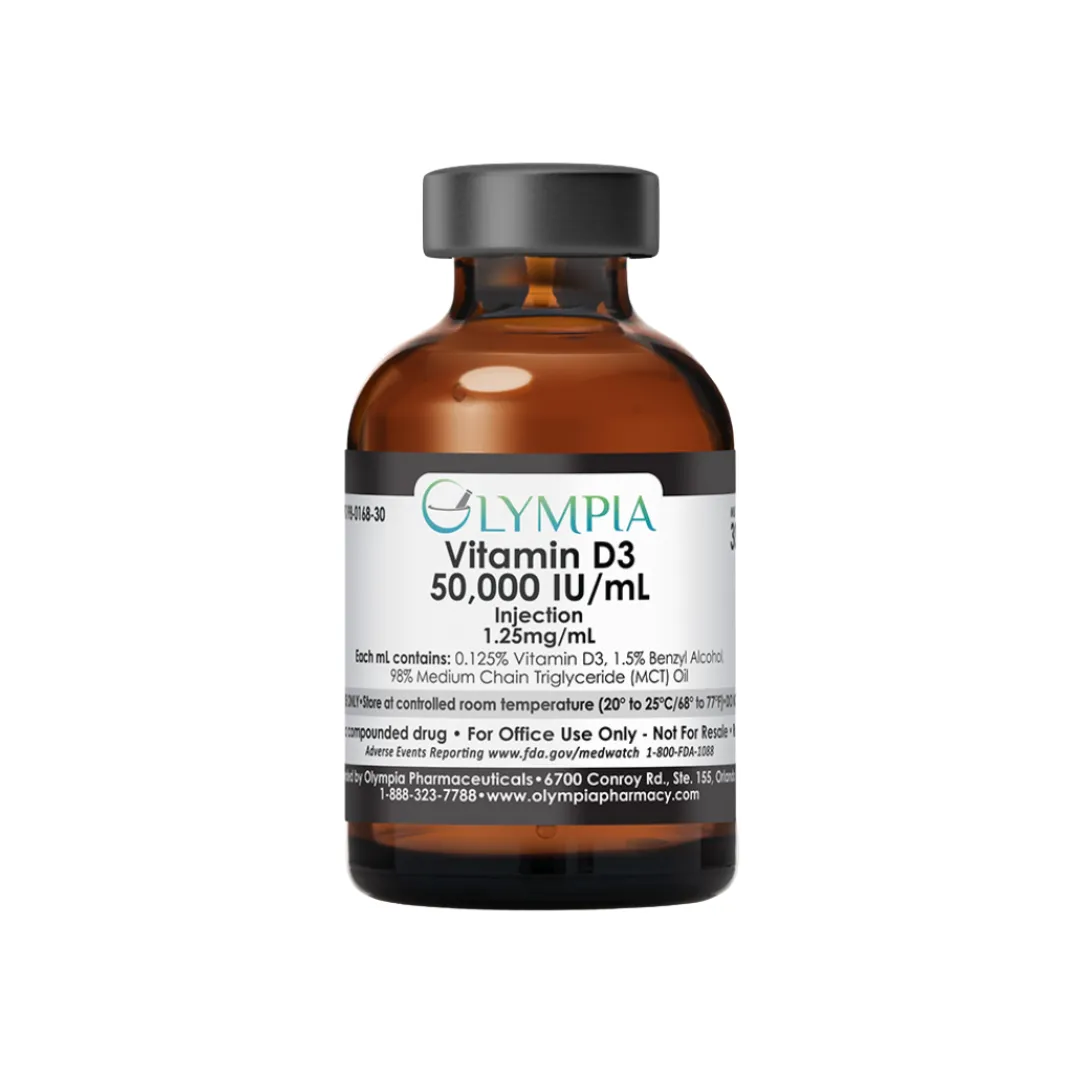
Vitamin D3 - 30ml
IM Injection
$140
Concentration
Vitamin D3: 50,000 IU/ml
Overview
Vitamin D plays an essential role in maintaining strong bones and healthy teeth. It helps the body absorb calcium, which is a primary mineral required for bone development and maintenance. Without adequate Vitamin D, the body cannot properly utilize calcium, which may affect bone health over time.
The body naturally produces Vitamin D when the skin is exposed to sunlight. However, only a limited number of foods naturally contain Vitamin D. Small amounts can be found in foods such as fatty fish (including salmon, mackerel, and sardines), fortified dairy products, and fortified cereals. Because many individuals do not receive enough sunlight or dietary Vitamin D, supplementation is often recommended.
Vitamin D exists in several forms, with the two most common being Vitamin D2 (ergocalciferol) and Vitamin D3 (cholecalciferol). Vitamin D3 is the form most commonly used for supplementation because it is the same form produced naturally in the body when exposed to sunlight. Once absorbed, cholecalciferol is converted into its active form, calcitriol, which helps regulate calcium and phosphorus levels in the body. This process supports bone health and may also contribute to immune system function and normal cellular processes.
Vitamin D3 injections may help support individuals with low Vitamin D levels and may assist in addressing symptoms associated with deficiency, such as fatigue or bone discomfort. Low Vitamin D levels have also been linked to several health concerns, including cardiovascular conditions, cognitive decline in older adults, respiratory issues such as severe asthma, and other chronic health conditions.
What Are Vitamin D3 Injections Prescribed For?
Vitamin D3 injections may be recommended for individuals with low vitamin D levels or conditions such as osteomalacia, osteoporosis, diabetes, or rickets.
Other Uses
Vitamin D3 plays an important role in supporting immune function as well as maintaining healthy bones and nerve function. Vitamin D injections may help improve calcium absorption, which contributes to stronger and healthier bones.
Dosage, Concentration, Route of Administration
Dosage ➝ Seek advice from a licensed physician, medical director, or other healthcare provider
Concentration ➝ 50,000 IU/ml
Route of Administration ➝ For IM Injection only
Precautions/Side Effects
Safety & Important Information
Vitamin D3 may interact with certain medications and supplements. Always consult your healthcare provider before starting any new medication or vitamin therapy. It is recommended to provide your doctor with a complete list of all medications, supplements, and products you are currently using so they can evaluate potential interactions.
If you experience symptoms that may indicate an overdose, seek medical attention immediately. Certain medical conditions may also make Vitamin D3 supplementation inappropriate. These may include sarcoidosis, elevated phosphate levels in the blood, high calcium levels, excessive Vitamin D levels, arteriosclerosis involving blocked arteries, kidney stones, impaired kidney function, or known allergies to Vitamin D.
Possible Side Effects
When used at recommended doses, Vitamin D injections are generally well tolerated and many individuals experience no side effects. However, excessive amounts of Vitamin D may lead to adverse reactions. Possible symptoms of high Vitamin D levels may include:
– Nausea
– Vomiting
– Decreased appetite
– Constipation
– Weakness or fatigue
– Unexplained weight loss
– Confusion or disorientation
– Irregular heart rhythm
– Kidney complications
If you experience persistent or concerning symptoms, contact your healthcare provider for further evaluation.
Storage
Store at controlled room temperature. Protect from light.
Vitamin B-Complex
$160
Restore your vitality and succeed in your physical endeavors with our Myers' Cocktail IV treatment + Glutathione Push.
Ingredients: Vitamin C | B-Complex |B-12 | Mineral Blend | Glutathione Push
How to Remove the Metal Vial Cap
Learn how to safely remove the metal vial cap before
preparing your vitamin injection.
Vitamin D3 - 30ml
$140
Concentration
Vitamin D3: 50,000 IU/ml
Overview
Vitamin D plays an essential role in maintaining strong bones and healthy teeth. It helps the body absorb calcium, which is a primary mineral required for bone development and maintenance. Without adequate Vitamin D, the body cannot properly utilize calcium, which may affect bone health over time.
The body naturally produces Vitamin D when the skin is exposed to sunlight. However, only a limited number of foods naturally contain Vitamin D. Small amounts can be found in foods such as fatty fish (including salmon, mackerel, and sardines), fortified dairy products, and fortified cereals. Because many individuals do not receive enough sunlight or dietary Vitamin D, supplementation is often recommended.
Vitamin D exists in several forms, with the two most common being Vitamin D2 (ergocalciferol) and Vitamin D3 (cholecalciferol). Vitamin D3 is the form most commonly used for supplementation because it is the same form produced naturally in the body when exposed to sunlight. Once absorbed, cholecalciferol is converted into its active form, calcitriol, which helps regulate calcium and phosphorus levels in the body. This process supports bone health and may also contribute to immune system function and normal cellular processes.
Vitamin D3 injections may help support individuals with low Vitamin D levels and may assist in addressing symptoms associated with deficiency, such as fatigue or bone discomfort. Low Vitamin D levels have also been linked to several health concerns, including cardiovascular conditions, cognitive decline in older adults, respiratory issues such as severe asthma, and other chronic health conditions.
What Are Vitamin D3 Injections Prescribed For?
Vitamin D3 injections may be recommended for individuals with low vitamin D levels or conditions such as osteomalacia, osteoporosis, diabetes, or rickets.
Other Uses
Vitamin D3 plays an important role in supporting immune function as well as maintaining healthy bones and nerve function. Vitamin D injections may help improve calcium absorption, which contributes to stronger and healthier bones.
Dosage, Concentration, Route of Administration
Dosage ➝ Seek advice from a licensed physician, medical director, or other healthcare provider
Concentration ➝ 50,000 IU/ml
Route of Administration ➝ For IM Injection only
Precautions/Side Effects
Safety & Important Information
Vitamin D3 may interact with certain medications and supplements. Always consult your healthcare provider before starting any new medication or vitamin therapy. It is recommended to provide your doctor with a complete list of all medications, supplements, and products you are currently using so they can evaluate potential interactions.
If you experience symptoms that may indicate an overdose, seek medical attention immediately. Certain medical conditions may also make Vitamin D3 supplementation inappropriate. These may include sarcoidosis, elevated phosphate levels in the blood, high calcium levels, excessive Vitamin D levels, arteriosclerosis involving blocked arteries, kidney stones, impaired kidney function, or known allergies to Vitamin D.
Possible Side Effects
When used at recommended doses, Vitamin D injections are generally well tolerated and many individuals experience no side effects. However, excessive amounts of Vitamin D may lead to adverse reactions. Possible symptoms of high Vitamin D levels may include:
– Nausea
– Vomiting
– Decreased appetite
– Constipation
– Weakness or fatigue
– Unexplained weight loss
– Confusion or disorientation
– Irregular heart rhythm
– Kidney complications
If you experience persistent or concerning symptoms, contact your healthcare provider for further evaluation.
Storage
Store at controlled room temperature. Protect from light.
Vitamin B-Complex
IM Injection
$160
Concentration
Thiamine HCl (B1): 100mg/ml
Niacinamide (B3): 100mg/ml
Riboflavin 5 Phosphate (B2): 2mg/ml
Dexpanthenol (B5): 2mg/ml
Pyridoxine HCl (B6): 2mg/ml
Overview
Formulated with essential B-complex vitamins, Olympia Vita-Complex helps support natural energy production, nutrient metabolism, and healthy-looking skin.
Ingredient Breakdown
Thiamine (B1) – 100mg/mL ➝ Supports immune function and helps the body transform carbohydrates and fats into usable energy.
Niacinamide (B3) – 100mg/mL ➝ Helps reduce inflammation while supporting clear, healthy-looking skin.
Riboflavin (B2) – 2mg/mL ➝ Supports metabolic function and contributes to maintaining a healthy immune system.
Dexpanthenol (B5) – 2mg/mL ➝ Plays an important role in supporting healthy skin, hair, eyes, and liver function.
Pyridoxine (B6) – 2mg/mL ➝ Supports red blood cell formation and helps the body convert nutrients from food into energy.
Dosage, Concentration, Route of Administration
Dosage ➝ Consult a licensed physician, medical director, or qualified healthcare professional for guidance on appropriate dosing.
Concentration ➝ Refer to the ingredient details above for the specific concentration of each component.
Route of Administration ➝ This formula may be administered via IV, intramuscular (IM), or subcutaneous (SubQ) injection.
Storage
Store at controlled room temperature. Protect from light.
How to Remove the Metal Vial Cap
Learn how to safely remove the metal vial cap before
preparing your vitamin injection.
Step-by-Step Instructions
1. Inspect the Vial
Before starting, confirm that the vial label is correct and shows no signs of tampering. Also review the expiration date and recommended storage conditions.
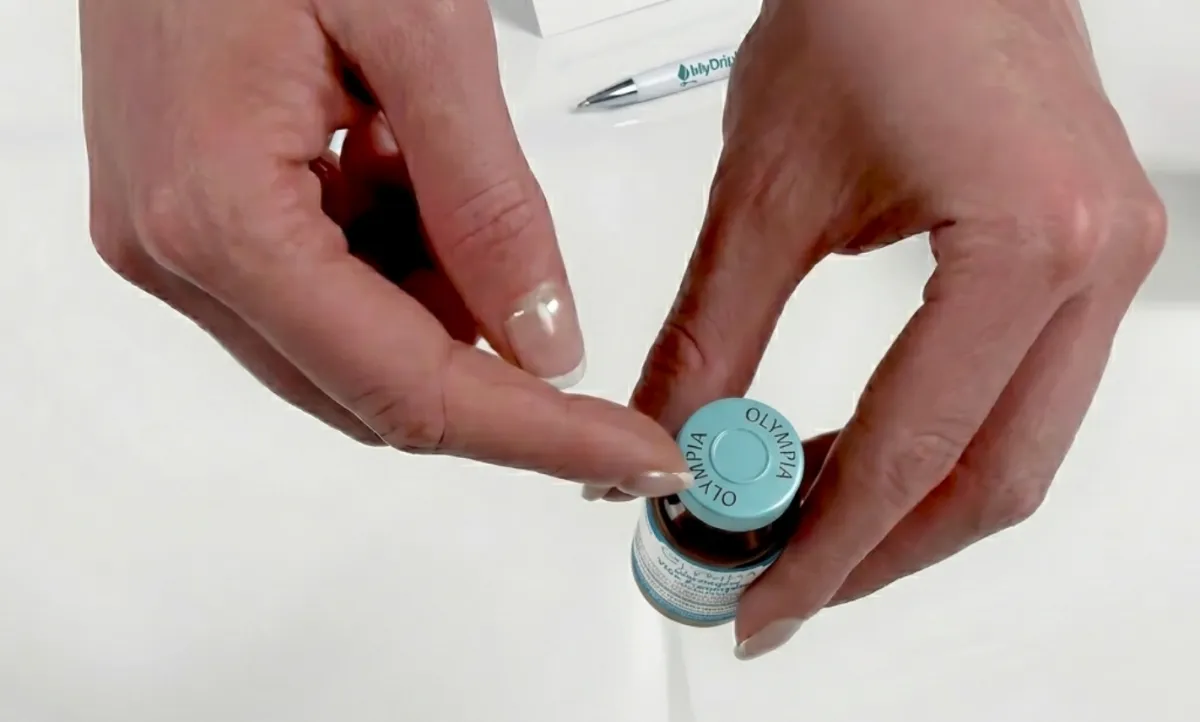
2. Locate the Perforated Ring
Locate the circular perforated ring in the center of the metal vial cap. This is the portion that needs to be removed.
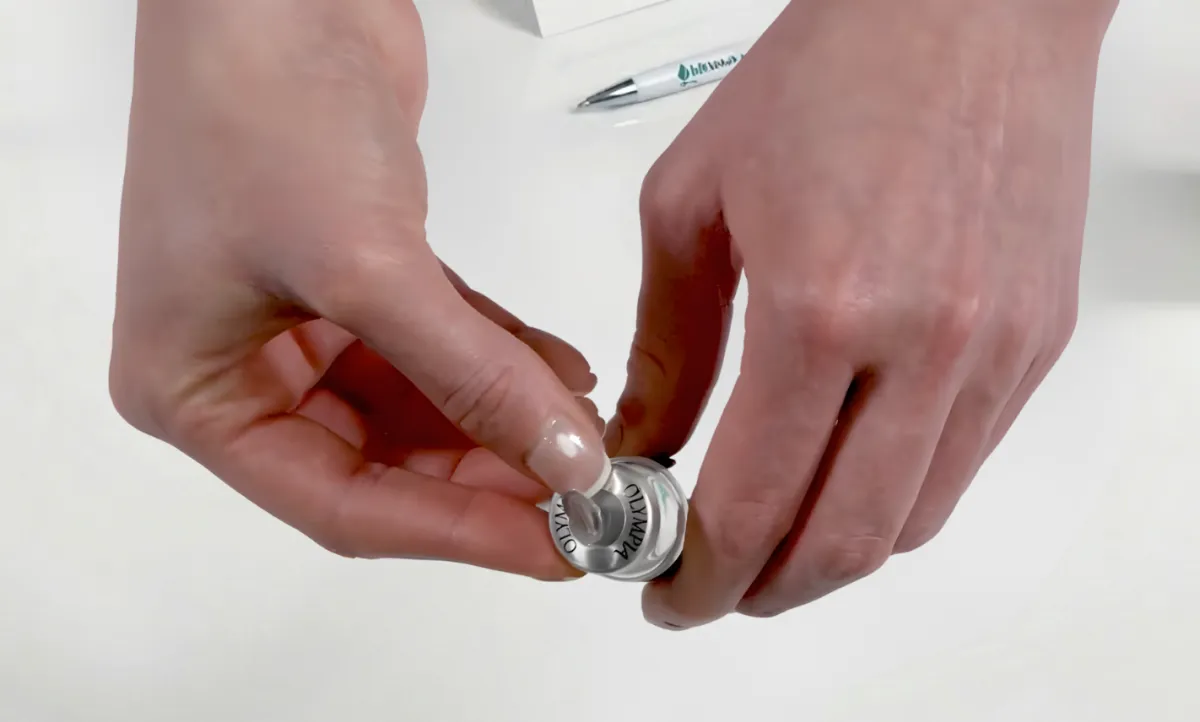
3. Use a Fingernail to Loosen the Ring
Carefully place a fingernail under the edge of the perforated ring and begin to lift it upward. Slowly peel the ring away from the vial.
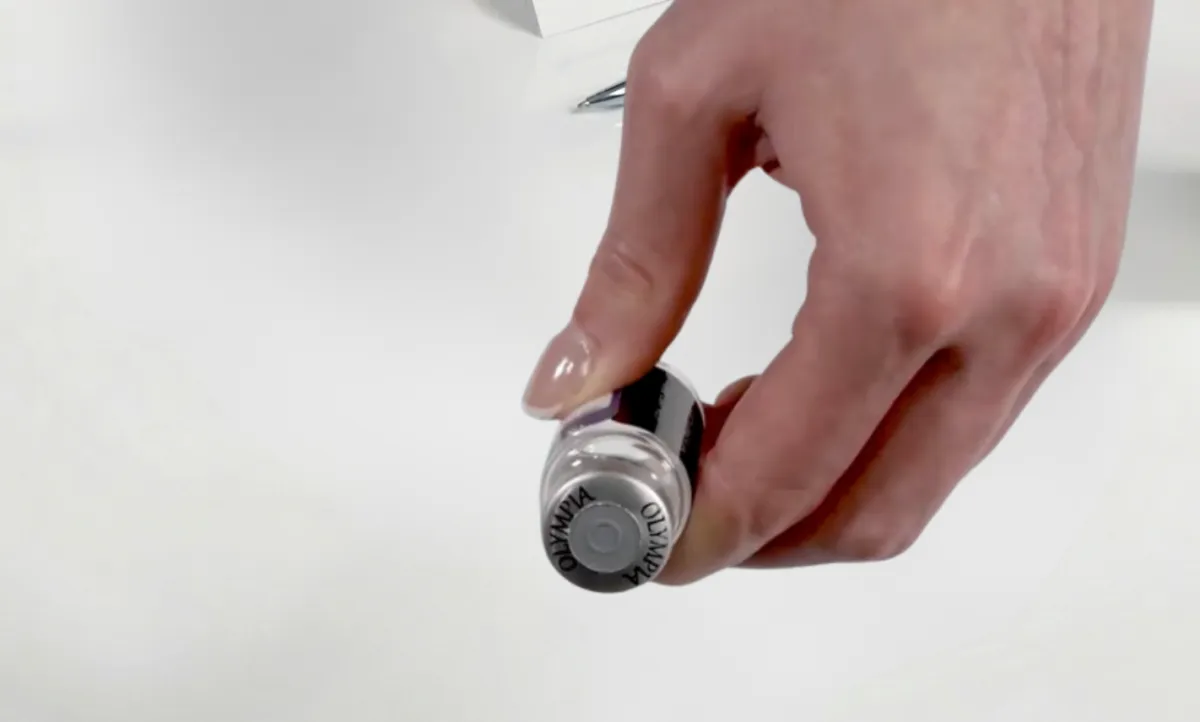
4. Remove Only the Inner Foil
Make sure you remove only the inner foil ring and not the entire metal cap. The outer metal ring should remain in place. Once the gray rubber stopper is exposed, the vial is ready to use.

Tips for Safe Vial Preparation
Always wash your hands thoroughly before handling any medication or vial.
Avoid using sharp objects to remove the cap, as this may damage the vial or lead to injury.
Once the foil seal has been removed, disinfect the rubber stopper with an alcohol swab before inserting the needle.
Step-by-Step Instructions
1. Inspect the Vial
Before starting, confirm that the vial label is correct and shows no signs of tampering. Also review the expiration date and recommended storage conditions.
2. Locate the Perforated Ring
Locate the circular perforated ring in the center of the metal vial cap. This is the portion that needs to be removed.
3. Use a Fingernail to Loosen the Ring
Carefully place a fingernail under the edge of the perforated ring and begin to lift it upward. Slowly peel the ring away from the vial.
4. Remove Only the Inner Foil
Make sure you remove only the inner foil ring and not the entire metal cap. The outer metal ring should remain in place. Once the gray rubber stopper is exposed, the vial is ready to use.
Tips for Safe Vial Preparation
Always wash your hands thoroughly before handling any medication or vial.
Avoid using sharp objects to remove the cap, as this may damage the vial or lead to injury.
Once the foil seal has been removed, disinfect the rubber stopper with an alcohol swab before inserting the needle.
How to Inject an Intramuscular (IM) Shot
How to Inject an Intramuscular (IM) Shot
Watch this step-by-step tutorial on how to safely prepare and administer an intramuscular (IM) vitamin injection.
How to Inject a Subcutaneous (Sub-Q) Shot
How to Inject a Subcutaneous (Sub-Q) Shot
Watch this step-by-step tutorial to learn the proper technique for administering a subcutaneous (Sub-Q) vitamin injection safely.
Watch this step-by-step tutorial to learn the proper technique for administering a subcutaneous (Sub-Q) vitamin injection safely.
Frequently Asked Questions
What is a Vitamin D3 injection?
A Vitamin D3 injection delivers cholecalciferol directly into the body to help support healthy vitamin D levels, bone strength, calcium absorption, and immune function.
What are the benefits of Vitamin D3 injections?
Vitamin D3 injections may help support bone health, improve calcium absorption, strengthen the immune system, and maintain healthy nerve and muscle function.
What is cholecalciferol?
Cholecalciferol is the natural form of Vitamin D3 that the body produces when skin is exposed to sunlight. It is commonly used in supplementation because it helps maintain healthy vitamin D levels.
Who may benefit from Vitamin D3 injections?
Individuals with low vitamin D levels, limited sun exposure, certain dietary restrictions, or conditions affecting vitamin D absorption may benefit from Vitamin D3 injections.
How do Vitamin D3 injections work?
Vitamin D3 injections deliver the vitamin directly into the body, helping maintain adequate vitamin D levels and supporting calcium absorption for healthy bones and teeth.
What symptoms are associated with Vitamin D deficiency?
Low vitamin D levels may be associated with symptoms such as fatigue, bone discomfort, muscle weakness, or reduced immune function.
How often should Vitamin D3 injections be used?
The frequency of Vitamin D3 injections varies depending on individual needs and medical guidance. A healthcare professional can determine the appropriate schedule.
Are Vitamin D3 injections safe?
Vitamin D3 injections are generally well tolerated when used at recommended doses. However, individuals should consult with a healthcare provider before starting vitamin therapy.
How is Vitamin D3 administered?
Vitamin D3 may be administered through injection as part of a wellness or medical protocol recommended by a healthcare professional.
Are Vitamin D3 injections available in Sedona Arizona?
Yes. Vitamin D3 injections are available in Sedona Arizona with convenient delivery options as part of vitamin therapy and wellness programs.
Testimonials
IV Cocktails
Weight Loss
For Providers
Legal
Contact Info
Riman Products
Other Links